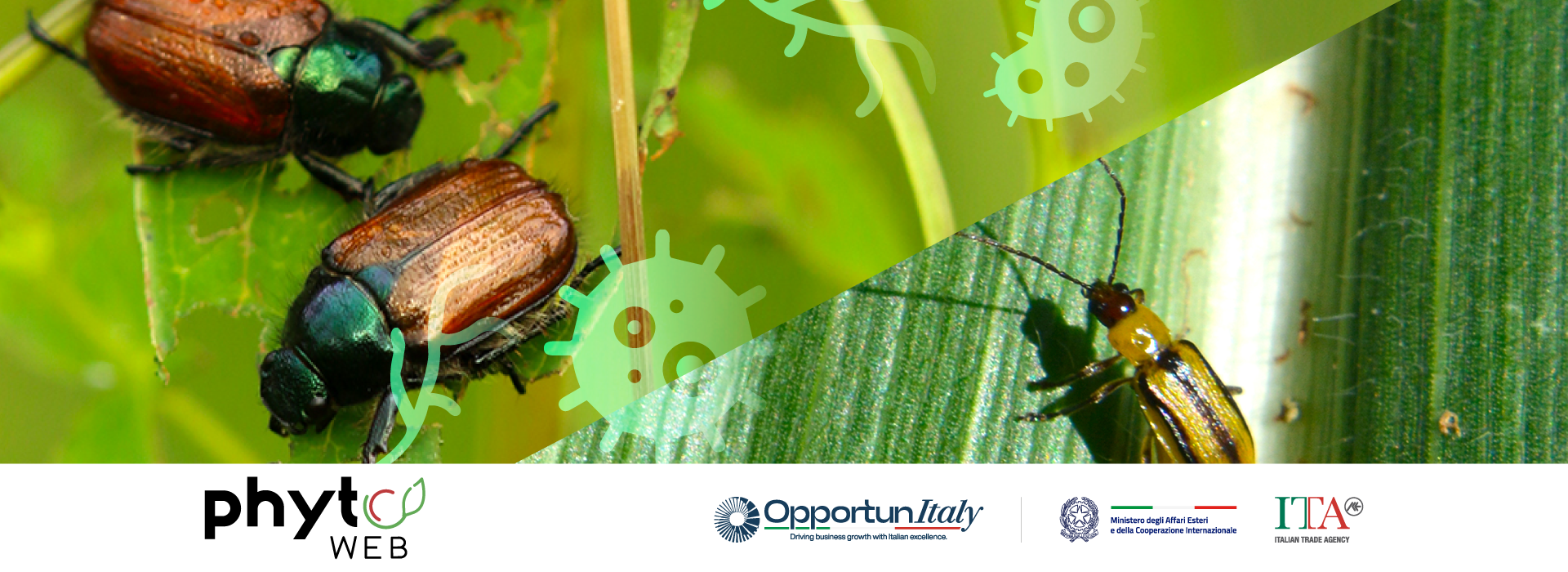
The EFSA (European Food Safety Authority) has recently updated the list of priority pests for the European Union, identifying 47 species that require attention, monitoring, and strengthened quarantine measures.
These potentially invasive insects, bacteria, fungi, and parasites pose a real risk to agriculture, plant nursery industry, and European natural ecosystems. If introduced into previously unaffected areas, these organisms can spread rapidly, causing damage that is difficult to contain—not only in terms of production, but also environmentally and economically.
In this context, prevention becomes the most powerful tool: constant monitoring, control of plant material flows, and the updating of databases are no longer optional activities, but essential obligations.
Since 2022, a group of over 130 experts has analyzed the potential impact of these 47 organisms, including the 20 already listed as EU priority pests, assessing their capacity to spread and the possible consequences for agriculture, biodiversity, and forestry. The study was based on over 220 estimates of yield losses and expansion rates, providing the EU with a solid scientific basis for updating the official list of priority pests and strengthening phytosanitary policies to prevent new emergencies. Among the 47 identified organisms are:
- Acleris minuta and Acleris semipurpurana
- Agrilus anxius
- Agrilus planipennis
- Anastrepha ludens
- Anoplophora chinensis
- Anoplophora glabripennis
- Anthonomus eugenii
- Aromia bungii
- Arrhenodes minutus
- Bactericera cockerelli
- Bactrocera dorsalis
- Bactrocera zonata
- Bretziella fagacearum
- Bursaphelenchus xylophilus
- Candidatus Liberibacter spp.
- Choristoneura fumiferana and Choristoneura parallela
- Conotrachelus nenuphar
- Dendrolimus sibiricus
- Diabrotica undecimpunctata howardi
- Diabrotica virgifera zeae
- Grapevine flavescence dorée phytoplasma
- Helicoverpa zea
- Keiferia lycopersicella
- Listronotus bonariensis
- Nepovirus myrtilli (Blueberry leaf mottle virus)
- Phyllosticta citricarpa
- Phymatotrichopsis omnivora
- Pissodes spp. (P. nemorensis, P. nitidus, P. strobi, P. terminalis, P. yunnanensis)
- Polygraphus proximus
- Popillia japonica
- Porphyrophora tritici
- Prodiplosis longifila
- Pseudocercospora pini-densiflorae
- Ralstonia pseudosolanacearum
- Rhagoletis pomonella
- Spodoptera frugiperda
- Spodoptera litura
- Thaumatotibia leucotreta
- Thrips palmi
- Xanthomonas citri
For the Italian plant nursery sector, which is strongly export-oriented, this update represents a clear signal. Incorrect international shipments, neglected documentation, and undetected pests expose companies to increasing risks.
In this scenario, knowing which species are included in official lists, identifying infestations early, and adopting procedures compliant with European regulations allows producers to best protect their crops. This is where digital tools like Phytoweb play a central role, supporting operators and professionals in preventing and managing phytosanitary risks. The platform enables users to:
- Access always-up-to-date European and national regulations;
- Conduct targeted risk analyses on their own productions;
- Manage official documentation, such as plant passports, in a simple and integrated way.
This approach allows companies to plan safe exports, reduce the risk of introducing invasive species, and turn regulatory compliance into a competitive advantage.
The inclusion of these 47 pests on the EU list is not just a technical update: it is a call to shared responsibility. In a globally interconnected market, knowledge and prevention have become key factors for ensuring production continuity, environmental protection, and international credibility.
For the plant nursery industry of the future, being informed, proactive, and prepared is no longer optional: it is a necessary condition for growing safely and sustainably.