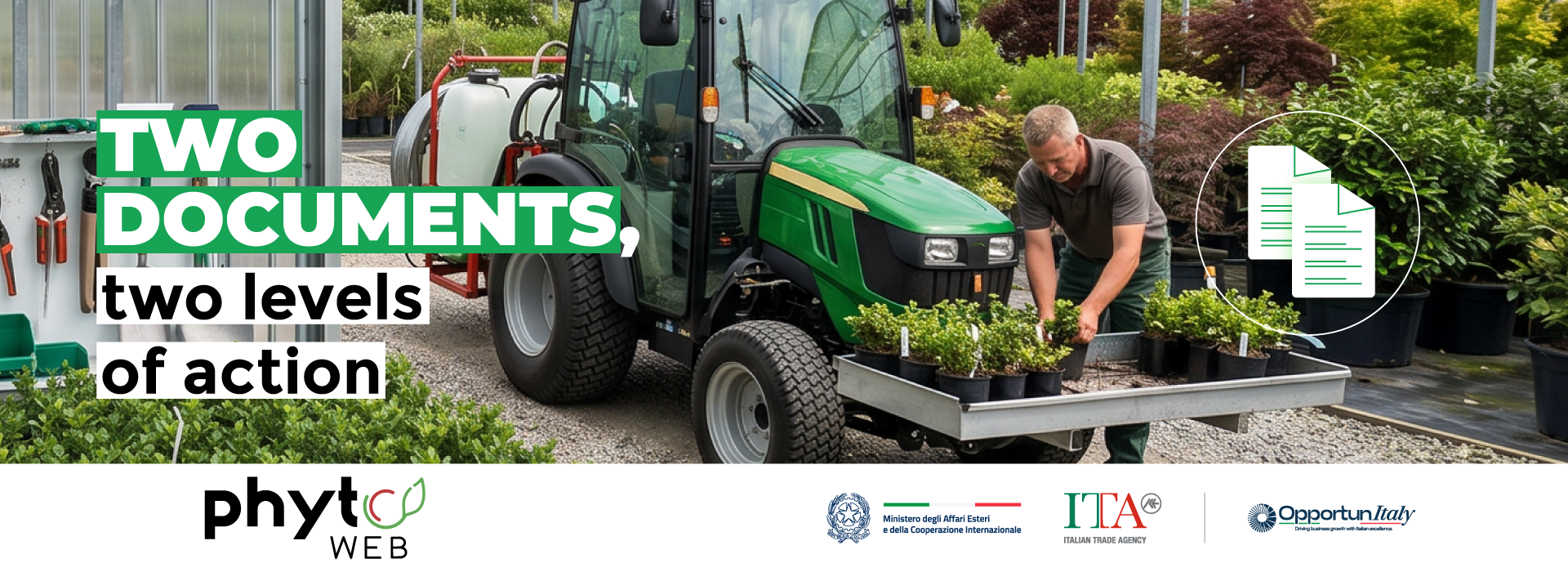
The National Plant Protection Service has published two new Official Technical Documents (DTUs) dedicated to ornamental plant production, with the aim of helping businesses organize their phytosanitary risk prevention, monitoring, and management activities.
This initiative marks an important step toward a more structured approach to plant health management, providing the sector with practical guidelines and shared tools that can be applied nationwide.
From prevention to operational response: two levels of action
The two documents address phytosanitary risk from complementary perspectives.
On the one hand, Official Technical Document (DTU) No. 78 provides guidance on the development of a risk management plan for regulated pests, as a preventive biological self-assessment tool. On the other hand, Official Technical Document (DTU) No. 79 outlines the procedures for the development of an Effective Action Plan, to be activated in the event of a suspected or confirmed presence of regulated pests, enabling businesses to respond effectively to phytosanitary emergencies.
The objective is to support nurseries and ornamental plant producers throughout the entire phytosanitary risk management cycle, promoting a more structured and documented approach in line with European legislation.
A collaborative achievement
The new guidelines are the result of a collaborative effort involving ANVE, the Regional Plant Protection Services of Marche, Abruzzo, Puglia, Tuscany, and Sicily, as well as AIPP (Italian Association for Plant Protection). The initiative was driven by the shared goal of translating the operational needs of businesses into practical tools capable of facilitating dialogue between companies and the competent authorities. For the sector, this represents a significant milestone, introducing common criteria and practical tools that encourage greater consistency in the implementation of phytosanitary procedures.
Why does this matter to nurseries?
In a market that places increasing emphasis on traceability and production quality, phytosanitary risk management has become far more than a regulatory requirement. Having documented and verifiable procedures in place enables businesses to strengthen the reliability of their production systems, improve relationships with export markets, and effectively demonstrate the standards applied throughout the production process.
What are phytosanitary risk management plans?
Under Regulation (EU) 2016/2031, a risk management plan is a voluntary self-monitoring procedure to help businesses prevent and manage the presence of pests. It is essentially an internal risk-mapping exercise that enables companies to assess the phytosanitary status of their production systems and critically examine their processes: identifying where biological risks may arise, determining who is responsible for taking action, and establishing how to intervene before a potential issue develops into a serious problem.
Phytoweb’s digital support
In this context, tools such as Phytoweb — a project developed by ANVE and the Italian Trade Agency (ITA) — can support the practical implementation of the new technical documents. The platform enables users to assess the main phytosanitary risks associated with their crops, allowing them to:
- identify the harmful organisms relevant to the cultivated species;
- pinpoint the most critical stages of the production process;
- assess the level of risk associated with each harmful organism;
- define preventive and self-monitoring measures;
- develop a documented risk management plan that can be updated over time.
The goal is to promote an increasingly prevention-oriented approach, helping businesses identify potential threats before they become actual phytosanitary issues.
A new phase for the plant nursery industry
The publication of the new DTUs marks the beginning of an important new phase for the ornamental plant sector. Companies that are able to transform these guidelines into procedures fully integrated within their production systems will be best positioned to benefit from them—not only in terms of plant health and production quality, but also in strengthening relationships with Plant Health Authorities and destination markets alike.